Metabolic Handling of Different Fatty Acid Types
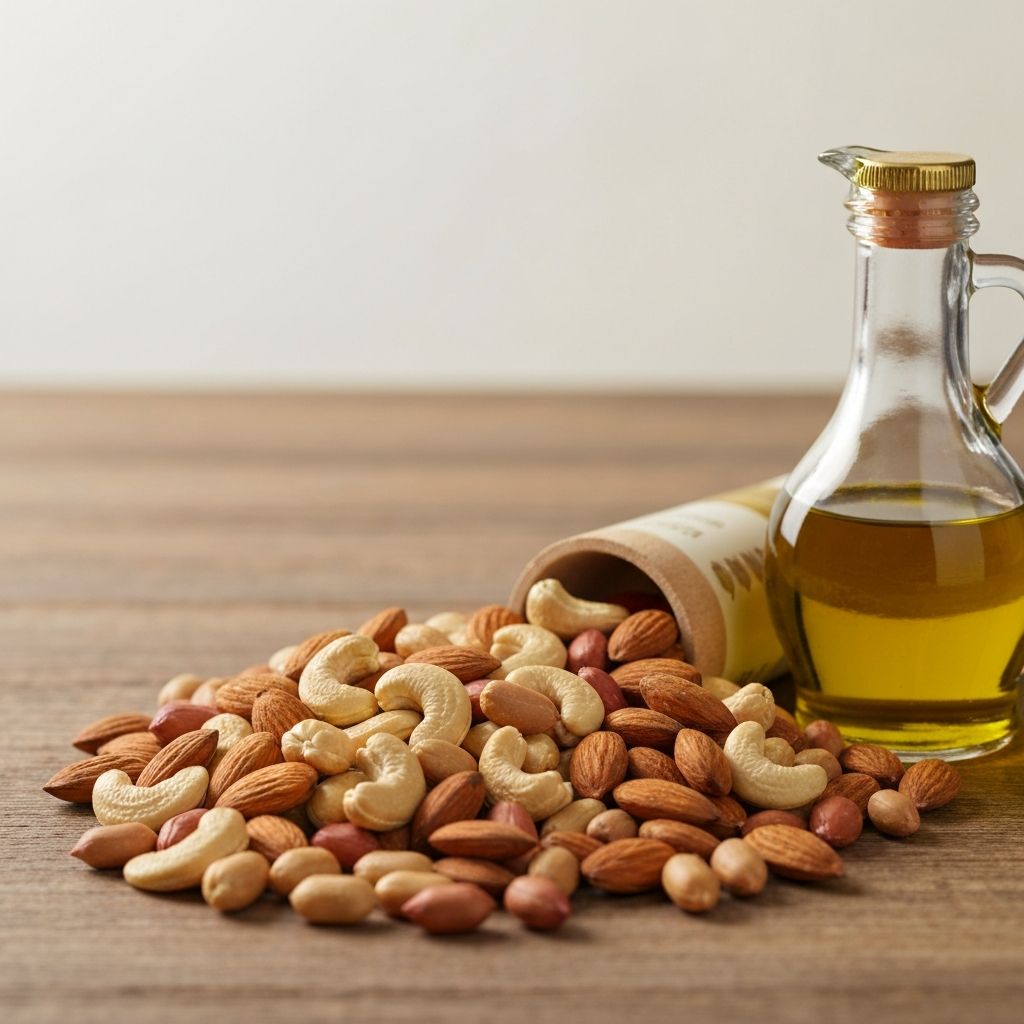
Dietary fats exist in multiple chemical forms—saturated, monounsaturated, and polyunsaturated fatty acids—each with distinct structural properties that influence how the body processes them. Understanding these metabolic differences provides important context for appreciating how dietary fat type affects physiology.
Saturated Fatty Acids
Saturated fatty acids contain no double bonds in their carbon chains, making them fully saturated with hydrogen atoms. Common sources include animal products such as meat and dairy, as well as some plant oils like coconut and palm oil. Structurally, saturated fats are straight-chain molecules that typically remain solid at room temperature due to tight packing.
Metabolically, saturated fatty acids undergo the same basic pathways as other fats—they are absorbed in the intestines, transported via chylomicrons, stored in adipose tissue, and oxidised for energy when needed. The liver actively processes saturated fats and can incorporate them into lipoproteins for transport throughout the body. Saturated fats do not require enzymatic desaturation before oxidation, unlike polyunsaturated fats.
Monounsaturated Fatty Acids
Monounsaturated fatty acids contain one double bond in their carbon chain, creating a kink in the molecular structure. This structural feature affects membrane fluidity and physical properties—monounsaturated fats are typically liquid at room temperature. Olive oil, avocados, and many nuts are rich in monounsaturated fats.
Metabolically, monounsaturated fats are processed similarly to saturated fats in the basic absorption and storage pathways. The single double bond does not require special enzymatic handling during oxidation—the body readily breaks these molecules down for energy. Monounsaturated fats are incorporated into cell membranes where the presence of double bonds increases membrane fluidity relative to saturated fat incorporation.
Polyunsaturated Fatty Acids
Polyunsaturated fatty acids contain multiple double bonds, creating multiple kinks in the molecular structure. This results in highly fluid molecules that are typically liquid at room temperature. Two essential polyunsaturated fats cannot be synthesised by the human body and must be obtained from diet: linoleic acid (omega-6) and alpha-linolenic acid (omega-3).
The metabolic handling of polyunsaturated fats is more complex than saturated or monounsaturated fats. These fatty acids are substrates for enzymatic conversion to longer-chain metabolites. Linoleic acid is converted to arachidonic acid through desaturation and elongation, whilst alpha-linolenic acid is converted to eicosapentaenoic acid (EPA) and docosahexaenoic acid (DHA). These conversions are enzyme-dependent and can be rate-limiting, particularly for the omega-3 pathway.
Omega-3 Fatty Acids
Omega-3 polyunsaturated fatty acids, exemplified by alpha-linolenic acid and its longer-chain derivatives EPA and DHA, play specialised metabolic roles. These fats are substrates for the synthesis of resolvins, protectins, and lipoxins—specialised lipid mediators that regulate inflammation and immune responses. Fish, flaxseeds, and walnuts are dietary sources of omega-3 fats.
The conversion of alpha-linolenic acid to EPA and DHA is relatively inefficient, occurring at low percentages in the human body. However, preformed EPA and DHA from fish sources bypass this conversion step and are directly available for incorporation into cell membranes and for conversion to bioactive metabolites.
Omega-6 Fatty Acids
Omega-6 polyunsaturated fatty acids, led by linoleic acid, are abundant in vegetable oils, nuts, and seeds. Linoleic acid is efficiently converted to arachidonic acid in the body. Arachidonic acid is the precursor for prostaglandins, thromboxanes, and leukotrienes—signalling molecules involved in inflammation, immune responses, blood clotting, and pain perception.
The omega-6 conversion pathway is more efficient than the omega-3 pathway, and arachidonic acid is readily available for metabolite production. The balance between omega-3 and omega-6 derived metabolites influences the overall inflammatory signalling state of tissues.
Hepatic Processing
The liver plays a central role in processing dietary fats of all types. Absorbed fatty acids and monoglycerides are resynthesised into triglycerides within enterocytes and transported as chylomicrons. After delivery to peripheral tissues, remaining chylomicron remnants return to the liver where they are processed. The liver also synthesises endogenous triglycerides and lipoproteins for transport of lipids throughout the body.
Beta-Oxidation
All fatty acid types undergo beta-oxidation for energy production. This mitochondrial process sequentially removes two-carbon units from fatty acid chains, producing acetyl-CoA that enters the citric acid cycle. The rate of beta-oxidation depends on energy demand, hormonal signals (particularly insulin and glucagon levels), and tissue type. Muscle tissue and liver are primary sites of fatty acid oxidation.
Tissue Incorporation
Different fatty acid types are incorporated into cell membranes based on dietary availability and metabolic requirements. Saturated fats decrease membrane fluidity, whilst unsaturated fats increase it. The brain, which is particularly rich in polyunsaturated fats, shows selective incorporation of DHA. Other tissues show more variability in fatty acid composition based on dietary intake patterns.
Conclusion
Whilst all dietary fats undergo similar absorption, storage, and oxidation pathways, they differ in their structural properties, enzymatic processing requirements, and roles in specialised metabolic pathways. Polyunsaturated fats serve as substrates for bioactive metabolite synthesis, whilst saturated and monounsaturated fats can directly serve energy and structural functions. Understanding these metabolic distinctions illustrates why dietary fat type matters for physiological processes beyond simple energy provision.